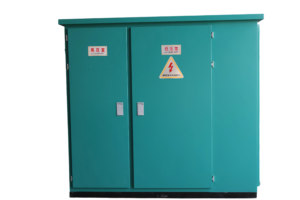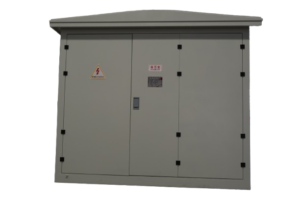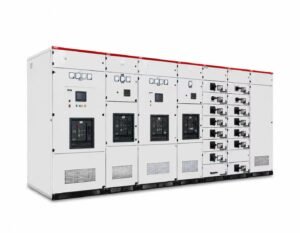
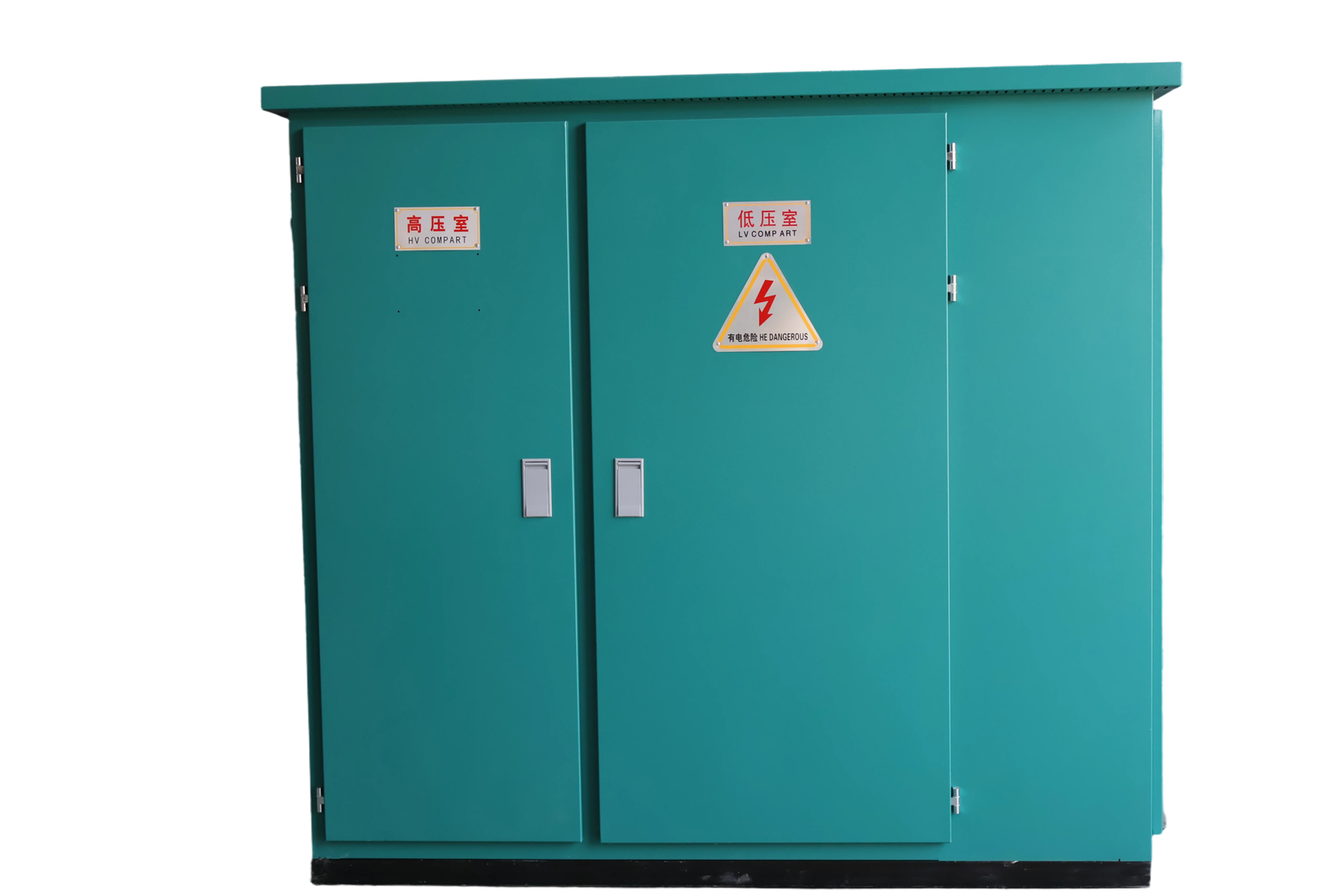
American Substation
American-style substations are innovative power infrastructure solutions tailored for modern industrial and residential power demands. They integrate high efficiency and stable reliability, with advanced protection functions and smart grid access capabilities to guarantee uninterrupted power supply and strengthen grid operational stability. The modular structure allows fast installation and flexible capacity expansion, adapting to both urban and rural power distribution needs. It provides a reliable and sustainable energy solution for modern power grid construction.
Product Introduction
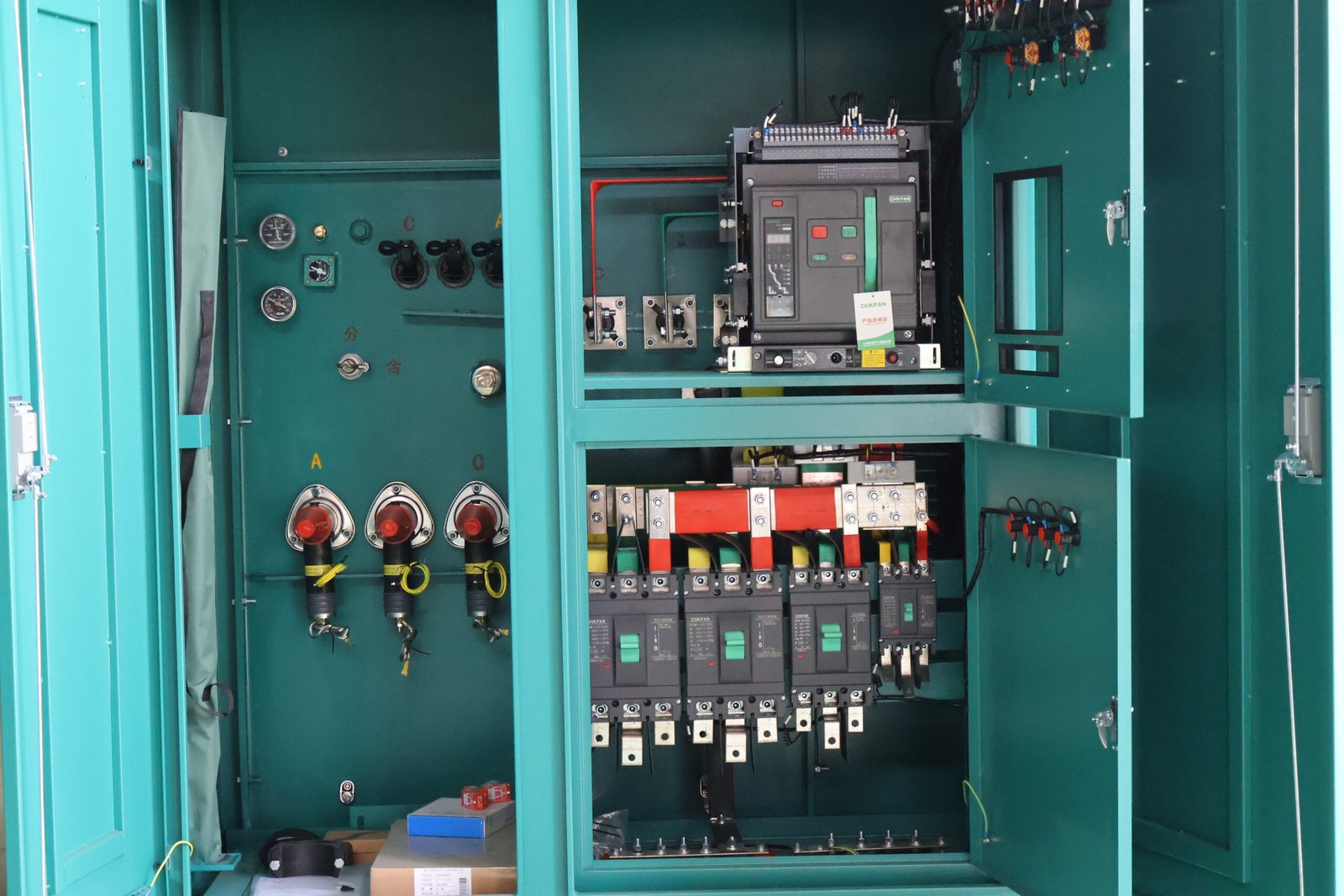
– Circuit breakers or fuses: Used for overcurrent protection to prevent damage to the system in case of short circuits or faults.
– Disconnect switches: Allows for the manual isolation of the substation for maintenance or repair work without disrupting service elsewhere on the network.
– Surge arresters: Protect the internal components of the substation from voltage surges caused by lightning strikes or switching operations.
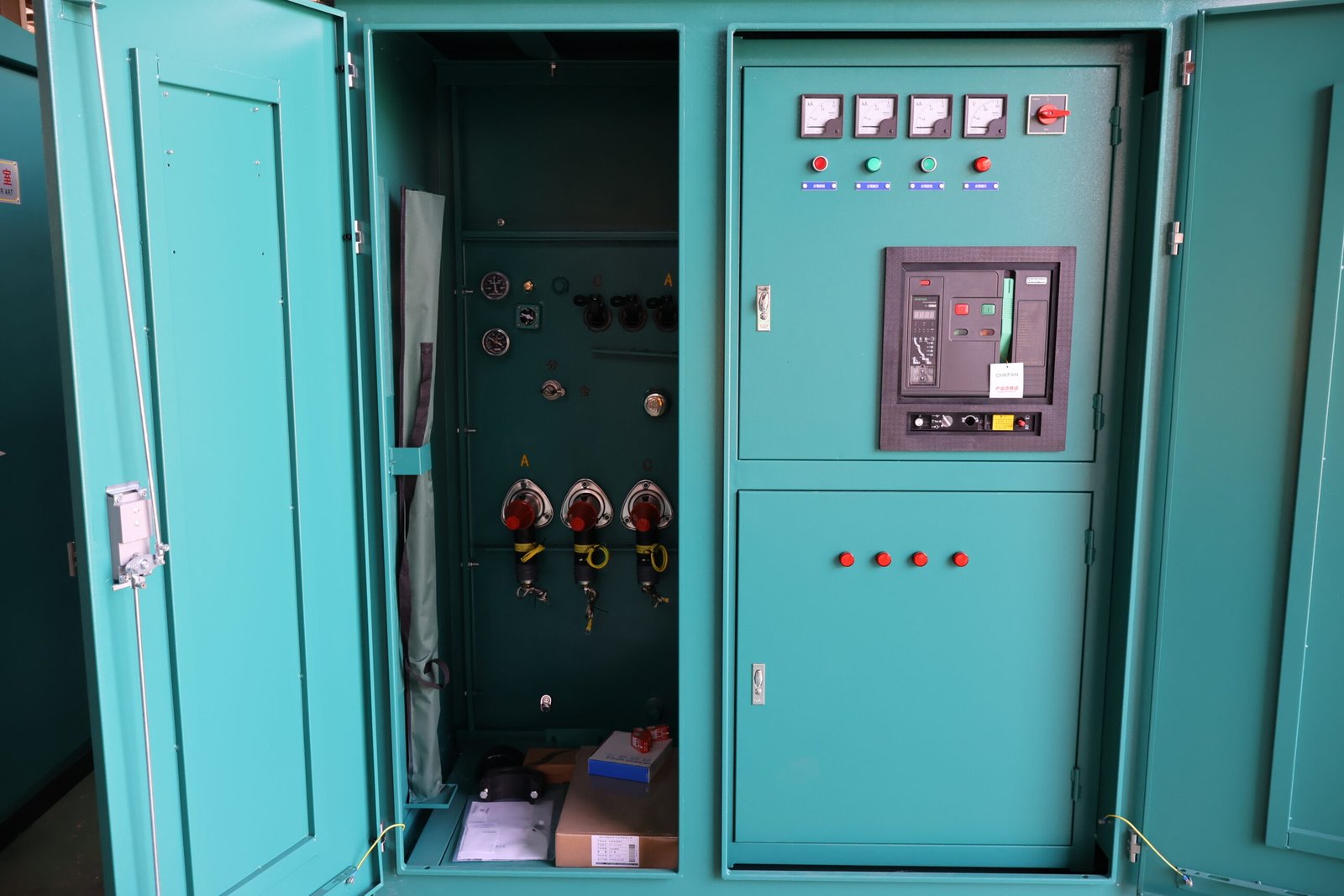
– Control and metering equipment: For monitoring and controlling the substation’s operation, which may include smart grid technology for enhanced communication and automation capabilities.
Box type substations are favored for their space-saving design, modularity, and ease of installation, making them particularly suitable for urban and suburban environments where land is at a premium. Their enclosed nature offers enhanced protection against the elements, wildlife, and unauthorized access, thereby improving safety and reliability. From an engineering perspective, the design and layout of American box type substations must adhere to stringent national standards, including those set by the National Electric Code (NEC), the Institute of Electric and Electronics Engineers (IEEE), and the Occupational Safety and Health Administration (OSHA). Compliance with these standards ensures that the substations are built to provide safe, reliable, and efficient service. Integrated with digital relays, smart metering and automatic control systems, box-type substations improve overall operating efficiency, reduce maintenance costs and boost grid stability. Amid the rapid development of renewable energy and distributed generation, these substations serve as key equipment for power network optimization. Their flexible and expandable design well adapts to the changing operational requirements of future power distribution systems.
Product Parameter
| Voltage Levels | Typically ranges from medium (12kV) to high (35kV/69kV) |
| Current Rating | Varies based on configuration and application (e.g., 630A, 1250A) |
| Frequency | Standard: 50/60 Hz |
| Enclosure Rating | NEMA 3R (weatherproof), NEMA 4X (watertight), etc. |
| Protection Class | IEEE C37.20.1 for medium voltage |
| Interrupting Capacity | Ranges from 10kA to 63kA, depending on the breaker selected |
| Temperature Range | Operating: -40°C to +70°C; Storage: -40°C to +85°C |
| Humidity Resistance | Up to 95% relative humidity non-condensing |
| Noise Level | Typically <65 dB(A) at 1m distance |
| Electromagnetic Fields | Complies with FCC and ICNIRP guidelines |
| Safety Clearances | Per ANSI/IEEE standards (e.g., minimum approach distances) |
| Certifications | UL Listed, NRTL (Nationally Recognized Testing Laboratory) |
| Customization Options | Available for specific customer requirements (e.g., climate control) |
| Warranty Period | 2 years |
| Maintenance Interval | Recommended annually or as per O&M manuals |
| Manufacturer Standards | ISO 9001, ISO 14001, OHSAS 18001 (or equivalent) |
Please note that the actual parameters may vary depending on the specific design and manufacturing details of each American box type substation. For detailed parameters, please refer to the product data sheets for each model of American box type substation or the technical information provided by our company.
Product Feature
- High-Efficiency Capabilities: Substation design and operation in the United States focuses on high-efficiency capabilities. They are carefully planned to ensure high efficiency in power transmission and distribution. From optimized transformer designs to sophisticated switchgear, substations are designed to minimize energy losses and ensure that power is transferred to its destination most efficiently.
- Technological Advancement: American substations adopt advanced technology and equipment to maintain their competitive advantage in the power grid. These include intelligent switchgear, digital control systems, remote monitoring and diagnostic systems, etc. The application of these technologies improves the operational efficiency and reliability of substations and prepares them for future power demands.
- Reliability and Stability: Substation design and operation focus on reliability and stability. They employ multiple backup systems and automated controls to ensure rapid response and maintain continuity of power supply in the event of a failure or emergency. In addition, they perform frequent preventive maintenance to ensure proper operation and long-term reliability of the equipment.
- Safety: Substations follow strict safety standards and regulations in design and operation to ensure the safety of personnel and equipment. This includes safety fencing, alarm systems, emergency stop buttons, and protection against fire and explosions. Operators receive specialized training to respond to emergencies and operate equipment correctly.
- Scalability: As power demand grows and technology evolves, U.S. substations have a certain degree of scalability. Their design allows for expansion or upgrades when required to accommodate new load demands and technical requirements. This flexibility ensures that the substation can meet future power needs and keep pace with the power industry.
- Environmental friendliness: In recent years, substation design has paid more and more attention to environmental friendliness. They use energy-efficient equipment and green technology to reduce their impact on the environment. In addition, some substations have adopted renewable energy integrated systems, such as solar panels or wind turbines, to increase the proportion of clean energy and reduce carbon emissions.
- Network Interconnectivity: As a key component of the power grid, substations in the United States have good network interconnectivity. A powerful communication and data exchange network has been established between them and power production units, other substations, and grid control centers to achieve real-time monitoring, fault diagnosis, and remote control.
Overall, American substations are known for their efficient capabilities, technological sophistication, reliability, and safety, making important contributions to ensuring sustainable power supply and meeting growing energy demands.
Applications
Substations in the United States have many important applications in the power industry. The following are their detailed applications:
- Power Transmission and Distribution: As pivotal hubs of power delivery, substations transmit electricity from power plants to end users. They convert generated high-voltage power into transmission-grade voltage for efficient long-distance delivery and distribute power to regional substations. Subsequent voltage conversion and power regulation enable the power supply to fit local regional and user requirements accurately.
- Power Grid Stability and Reliability: Substations are crucial to maintaining the stability and reliability of the power grid. They ensure the smooth operation of the power grid by controlling voltage, frequency, and current, monitoring system status, and implementing protective measures. Substations are also capable of quickly switching power in the event of a fault or emergency and isolating the faulty area to minimize the impact on the rest of the grid.
- Support Renewable Energy Integration: As renewable energy sources such as solar and wind power grow, substations play an important role in supporting their integration. They work by accessing and converting electricity from renewable power plants and integrating it into the main grid. In addition, substations provide energy storage solutions to balance the intermittent nature of renewable energy and provide a continuous supply of electricity.
- Electricity Market Participation: Substations provide services to energy suppliers and consumers by participating in the electricity market, such as energy exchanges and power purchase agreements. They can flexibly adjust power output according to market demand and provide stable and predictable power supply at a stable price.
- Supporting electric vehicle charging infrastructure: With the popularity of electric vehicles, substations have also begun to play a role in supporting electric vehicle charging infrastructure. They provide power to charging stations and monitor and control the electric vehicle charging process through intelligent charging equipment and management systems to provide efficient, safe, and reliable charging services.
- Data Center Power Supply: Data centers are critical for reliable power supply. Substations provide stable power to data centers and ensure continuous power supply through backup power and redundant systems to prevent service interruptions and data loss.
Collectively, U.S. substations serve a variety of critical applications in the electric power industry, playing an integral role from supporting electricity transmission and distribution to driving the integration of renewable energy and supporting the development of emerging technologies.
Shipping and Serving
Our technical and sales teams will design exclusive schemes according to your drawings and parameter requirements.The minimum order quantity is 1 piece, with 24 months of after-sales guarantee covered.We guarantee quick feedback and premium service for every partner.
Other Products

Oil Immersed Transformer
read more

Dry Type Transformer
read more

Other Transformer
read more

Box Type Substation
read more

Switchgear
read more