
Power Transformer Reliability: 7 Key Design Features to Extend Service Life
Power transformer reliability is the core concern for any power project. As the backbone of the power grid, solar farms, wind farms, and industrial power systems, a transformer’s service life, failure rate, and operational stability directly determine project safety, continuous power supply, and long-term operational costs.
For EPC contractors, power plant owners, and electrical engineers, reliability always ranks as the top priority during transformer selection—far more important than a low unit price. High-performance power transformers depend on mature, optimized structural design instead of merely basic technical parameters.
In this article, we break down 7 core design features that effectively boost power transformer reliability, lower failure risks, and prolong service life for long-term operation under harsh working conditions.https://new.abb.com/docs/default-source/ewea-doc/built-for-reliability-and-efficiencyfe8e4be2c1f463c09537ff0000433538.pdf
1. Optimized High-Grade Insulation System (Anti-Aging & Anti-Breakdown)
Insulation failure is the leading cause of transformer burnout and unexpected power outages. Reputable manufacturers adopt upgraded insulation design to prevent partial discharge and ageing deterioration, ensuring superior power transformer reliability.
- Class F/H high-temperature insulation materials: Aramid insulation paper and high-strength composite insulation structures enable long-term operation under high temperatures without embrittlement or dielectric breakdown.
- Vacuum drying & fully sealed structure: All coils undergo vacuum degassing and dehydration to remove internal moisture. A fully welded tank blocks humid air, dust, and salt fog from penetrating the insulation layers.
- Uniform electric field shielding design: Optimizes electric field distribution across windings to avoid localized field concentration, significantly cutting partial discharge risks under prolonged overload conditions.
Core benefit: Effectively extend insulation service life and prevent sudden breakdowns triggered by insulation ageing. Ideal for projects requiring 24/7 continuous operation.
2. Reinforced Short-Circuit Resistant Winding Design
Grid surges, equipment startup shocks, and external short-circuit faults generate massive instantaneous electromagnetic force, which easily deforms or burns coils of ordinary transformers. To maintain power transformer reliability, high-reliability units adopt a self-supporting rigid winding structure equipped with:
- High-tension wire windings and integral compression technology.
- Multi-layer axial heat dissipation ducts.
- Rigid sudden short-circuit dynamic stability testing.
Core benefit: Windings remain stable and undeformed under extreme short-circuit impacts, preventing permanent coil damage and costly project shutdowns.
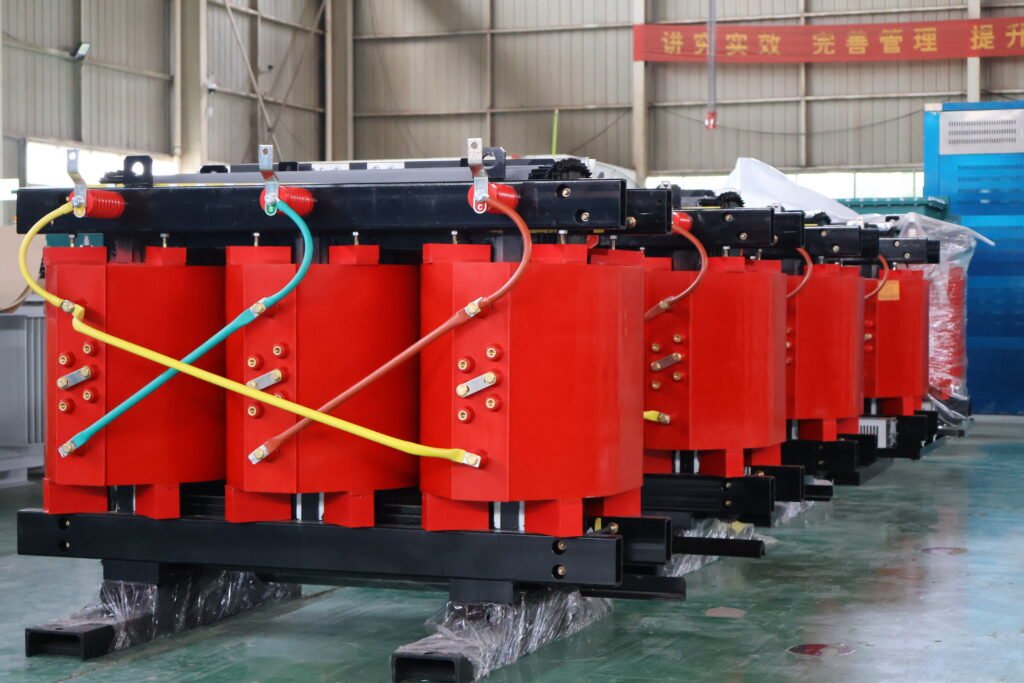
High reliability power dry type transformer for power distribution system
3. Low-Loss & Anti-Vibration Core Design
The transformer core determines no-load loss, temperature rise, and operational vibration. Poor-quality cores lead to overheating, excessive noise, and accelerated ageing. Robust designs adopt CRGO high-orientation silicon steel sheets or amorphous alloy cores with staggered stepping lap joint technology to ensure consistent power transformer reliability:
- Ultra-low no-load loss and no-load current.
- Even magnetic circuit distribution to eliminate local overheating.
- Integrated fixing assembly to reduce operational vibration and noise.
Core benefit: Stable temperature rise during continuous operation, reduced extra power loss, and avoided ageing failures caused by accumulated heat inside the core.
4. Intelligent Adaptive Cooling System
Overheating is one of the primary threats to insulation service life. Industry data indicates that every 8℃ rise in operating temperature halves the insulation lifespan. High-reliability transformers are fitted with CFD-simulated directional cooling systems supporting multiple cooling modes (ONAN/ONAF/ODAF):
- Automatically adjust fans and oil flow based on winding hot-spot temperatures.
- Precisely control temperature differences to eliminate local hot spots.
- Adapt to variable loads from intermittent power generation of solar and wind energy.
Core benefit: Prevent overheating failures under peak loads and fluctuating new energy loads to guarantee long-term stable operation.
5. Multi-Layer Anti-Corrosion & Weather-Proof Structure
Most power transformers are installed at outdoor substations, coastal wind farms, floating solar power plants, and desert industrial zones. Salt fog, UV radiation, and chemical corrosion rapidly degrade standard transformers. High-reliability transformers feature C4/C5-M high-standard anti-corrosion construction:
- Zinc-rich epoxy primer + weather-resistant topcoat dual anti-corrosion coating.
- Silicone rubber composite bushings (anti-pollution, UV-resistant, anti-creepage).
- Fully sealed low-voltage junction boxes to block rainwater and dust ingress.
Core benefit: Adaptable to harsh coastal, high-altitude, desert, and chemical industrial environments, drastically lowering on-site maintenance frequency.
6. Built-In Multi-Protection & Early Warning System
Premium transformers deliver stable mechanical performance as well as comprehensive active protection to avert catastrophic faults. Advanced reliability design integrates:
- DGA dissolved gas online monitoring: Real-time detection of fault characteristic gases for early prediction of overheating and arc risks.
- Partial discharge monitoring: Locates minor insulation defects to stop progressive breakdown failures.
- Over-temperature, overload, and lightning protection: Automatic tripping and protection under abnormal operating conditions.
- Pressure relief explosion-proof valve: Instantly releases internal pressure to avoid tank rupture.
Core benefit: Support predictive maintenance, prevent unexpected equipment failures, and reduce losses from unplanned power outages.
7. Seamless Sealing & Anti-Leakage Structural Design
Oil leakage is a common hidden hazard for oil-immersed transformers, resulting in insulating oil depletion, dampened insulation, and premature equipment scrapping. High-reliability transformers utilise full welding technology and premium fluororubber sealing gaskets, with strict leak testing conducted before delivery. The fully sealed integral structure effectively isolates external moisture and air.
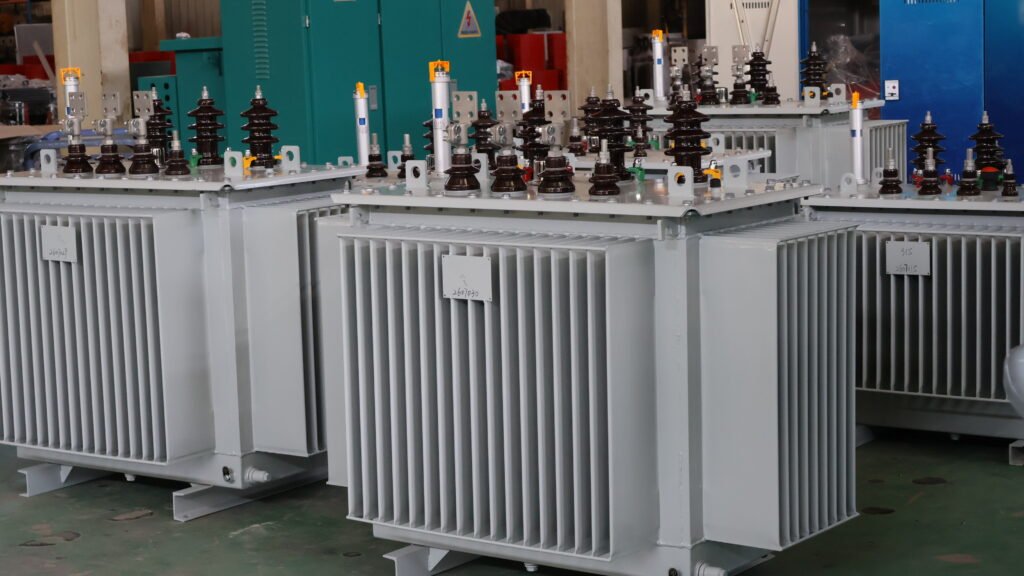
Core benefit: Achieve zero oil leakage during long-term outdoor service, cutting subsequent maintenance expenses and environmental pollution risks.Oil transformer
Final Conclusion: Why Reliability Design Matters for Your Project
When selecting power transformers, a low purchase price cannot offset massive losses resulting from equipment failure, production shutdown, and replacement work. All the optimized designs outlined above aim to reduce failure rates, extend service life, and cut full-lifecycle operating costs.
Whether for power grid infrastructure, solar & wind new energy projects, or industrial power distribution systems, high-reliability design constitutes the core procurement standard.
Get Custom High-Reliability Transformer Solutions
We specialise in manufacturing high-reliability oil-immersed transformers, dry-type transformers, pad-mounted transformers, and box-type substations customised for harsh operating environments. All products incorporate the above upgraded reliability designs and fully comply with IEC and ANSI standards. Contact our engineering team to obtain professional solutions and quotations for your power project.